
Boost Your Pet's Nighttime Safety Instantly with These 5 Remote-Controlled Collar Tips
.jpg/v1/fill/w_320,h_320/file.jpg)
Every year, thousands of pets are injured or lost during evening walks because drivers and pedestrians simply didn't see them in time. If you're relying solely on a reflective collar or hoping your pet's natural coat will keep them visible after sunset, you're taking an unnecessary risk. The problem isn't that reflective gear doesn't work: it's that reflective materials only work when direct light hits them at the right angle.
That's where active visibility technology changes everything. A light up dog collar with remote gives you instant control over your pet's visibility, allowing you to adjust lighting modes based on conditions, distance from traffic, and environmental factors. Think of it as the difference between hoping someone's headlights catch your dog's collar versus actively broadcasting your pet's location with light that's visible from every angle.
Why Remote-Controlled LED Collars Outperform Standard Reflective Gear
Standard reflective collars depend entirely on external light sources. During early morning or dusk walks: when over 60% of dog walking happens: there often isn't enough ambient light for reflective materials to do their job effectively. Add rain, fog, or tree-lined streets, and that reflective strip becomes nearly invisible until it's too late.
Remote-controlled LED collars solve this by providing active illumination that works independently of external conditions. Your pet becomes a light source rather than a light reflector, which means visibility from all directions, at all times, regardless of weather or ambient lighting.

What sets remote-controlled systems apart is the ability to adjust visibility on the fly. Approaching a busy intersection? Switch to flashing mode for maximum attention. Walking through a quiet neighborhood? Use steady mode for consistent visibility without distraction. This adaptability gives you control over your pet's safety in a way that passive reflective gear simply cannot match.
Additionally, remote-controlled LED collars are built for durability. Quality systems feature waterproof construction, impact-resistant housings, and long-lasting LED technology that won't fade or crack like reflective tape. You're investing in equipment that performs consistently night after night, season after season.
Tip #1: Master Your LED Modes for Different Environments
Your remote-controlled collar likely offers multiple lighting modes: steady, slow flash, rapid flash, and possibly even color options. Learning when to use each mode can dramatically improve your pet's visibility and safety.
Use steady mode for general neighborhood walks where you want consistent visibility without drawing excessive attention. This mode provides continuous illumination that makes your pet clearly visible to drivers and pedestrians while maintaining a calm walking environment.
Switch to slow flash mode when crossing streets or walking near parking lots. The pulsing pattern catches human peripheral vision more effectively than steady light, making drivers more likely to notice your pet even if they're not looking directly at them.
Deploy rapid flash mode in high-risk situations: crossing multi-lane roads, walking near construction zones, or navigating areas with heavy vehicle traffic. This creates an unmistakable visual alert that demands attention. Some studies suggest that flashing lights are up to 70% more noticeable than steady illumination in busy environments.
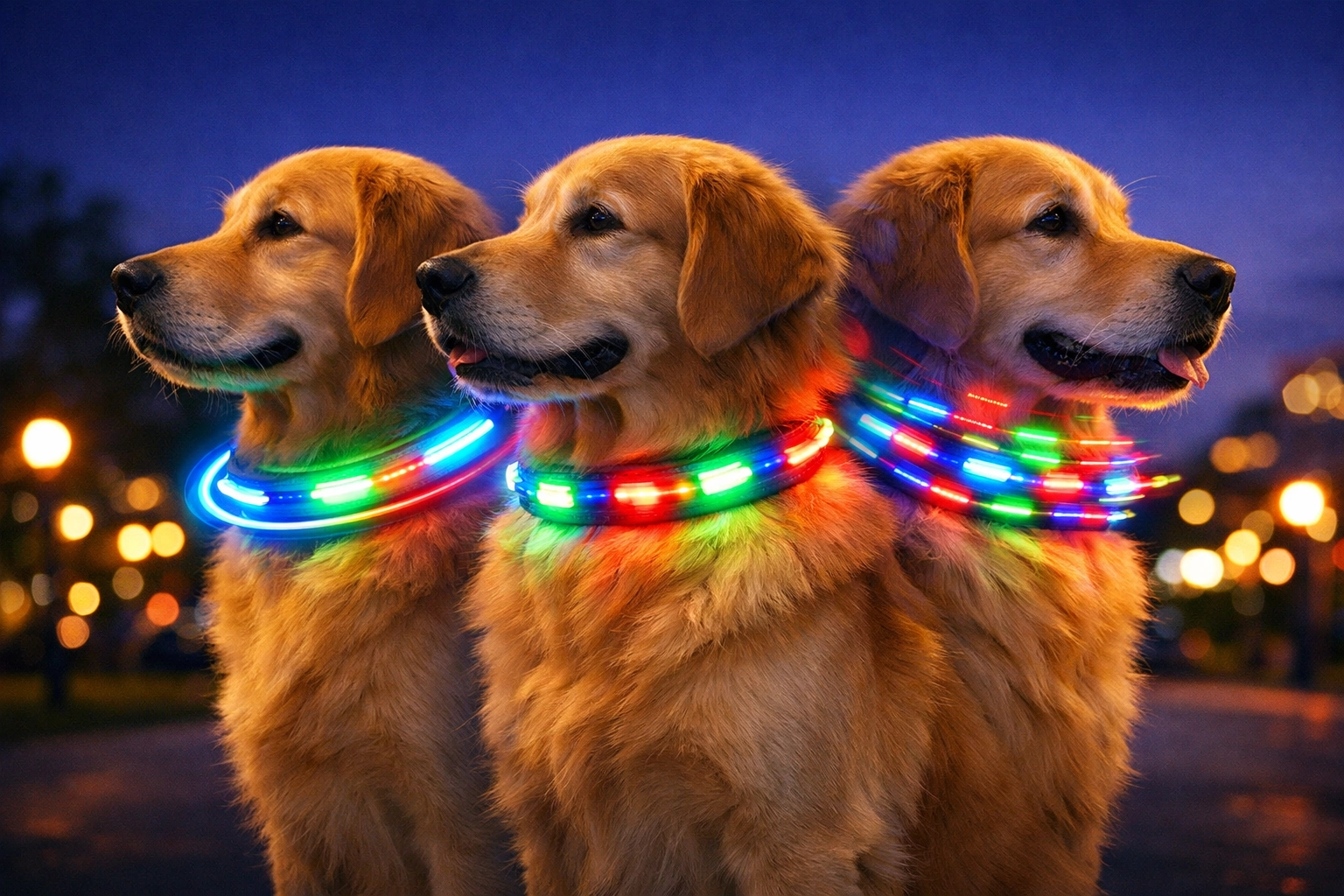
The remote control gives you the power to make these adjustments instantly, without stopping your walk or fumbling with collar buttons in the dark. Keep your remote in an accessible pocket or clipped to your belt so you can respond to changing conditions within seconds.
Tip #2: Test Visibility Distance Before Your First Walk
Before you trust your LED collar in real-world conditions, conduct a simple visibility test. Have a family member or friend walk your pet at various distances while you observe from the perspective of a driver or pedestrian.
Start at 50 feet and note whether the LED collar is clearly visible. Then increase the distance to 100 feet, 150 feet, and beyond. This gives you baseline data about how far away your pet can be seen, which directly impacts your safety decisions during actual walks.
Pay attention to how different modes perform at distance. You may find that steady mode works perfectly at 50 feet but becomes difficult to track at 150 feet, while flashing mode remains highly visible even at greater distances. This information helps you choose the right mode for different walking routes.
Test visibility in various lighting conditions too: full darkness, dusk, dawn, and under street lights. You'll discover that your collar performs differently depending on ambient light levels, and you'll learn which settings work best for your specific walking times and locations.
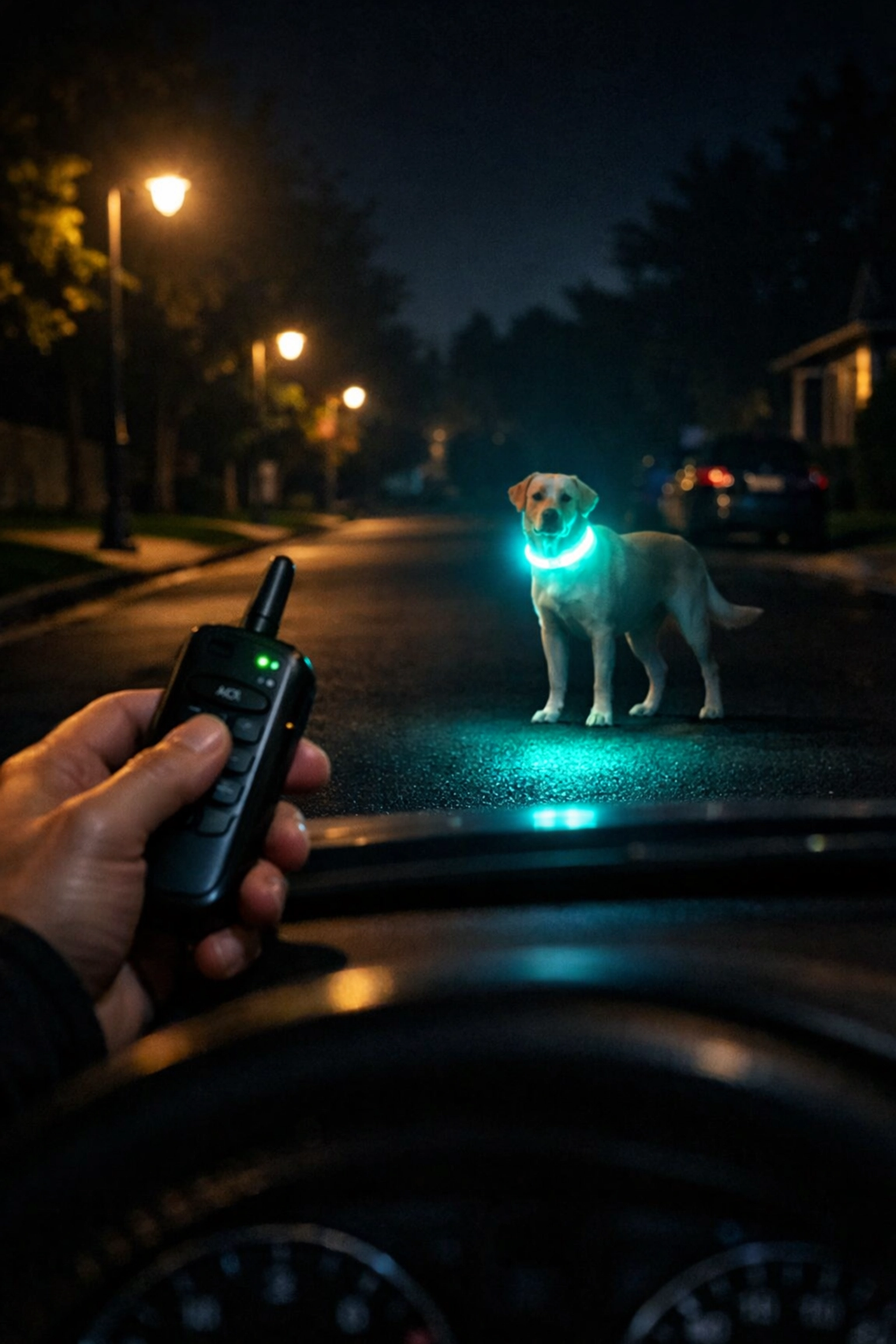
Finally, test the remote's range. Walk to the maximum distance you plan to have between you and your pet, then verify that you can still change modes from your remote. Quality systems offer ranges of 300 feet or more, but it's worth confirming before you rely on it in an emergency situation.
Tip #3: Position Your Remote for Instant Access
The value of remote-controlled visibility depends entirely on your ability to use it when needed. That means keeping your remote immediately accessible throughout your entire walk, not buried in a bag or jacket pocket you can't reach while holding a leash.
Invest in a belt clip or carabiner specifically for your remote. This keeps it secured but instantly available, allowing you to switch modes with one hand while maintaining control of your leash with the other. Some pet owners prefer wrist straps that keep the remote attached but freely movable.
Create a pre-walk habit of checking your remote's position and function before leaving home. A quick button press confirms the battery is active and the collar responds. This three-second check prevents the frustration of discovering mid-walk that your remote isn't working or isn't where you thought you put it.
Consider weather protection too. If you're walking in rain or snow, keep your remote in a waterproof case or bag that still allows easy access. Most quality remotes are water-resistant, but extended exposure to moisture can eventually cause problems. A simple plastic case protects your investment while maintaining functionality.
Tip #4: Maintain Battery Life with Smart Charging Habits
Remote-controlled LED collars run on rechargeable batteries, and battery management is crucial for consistent pet safety. The last thing you want is your collar dying halfway through an evening walk because you forgot to charge it after yesterday's adventure.
Establish a charging routine tied to your walking schedule. If you walk every evening, charge the collar every morning. If you walk multiple times daily, charge after your last walk of the day. Consistency prevents the common problem of realizing your battery is dead just as you're heading out the door.
Most LED collars provide 4-8 hours of runtime depending on brightness and flash settings. Track how long your specific collar lasts in your most-used mode, then charge well before you approach that limit. Don't wait for the low-battery indicator: charge proactively to ensure you never compromise visibility.
Keep your charging cable in a consistent, dedicated location. Many pet owners lose or misplace charging cables, which renders even the best LED collar useless. Designate a specific drawer or hook for your cable and always return it there after charging.
Consider purchasing a backup battery or second collar if you're a frequent walker or have multiple pets. This eliminates any safety gap caused by charging downtime and ensures you're never without active visibility protection for your animals.
Tip #5: Layer Your Safety Approach for Maximum Protection
While a light up dog collar with remote dramatically improves pet safety, the most effective approach combines multiple visibility layers. Think of LED collars as your primary active safety tool, but not your only one.
Continue using reflective leashes and harnesses alongside your LED collar. When a driver's headlights hit your pet, you want multiple visibility points: the active LED plus reflective surfaces: creating redundant safety systems. This layered approach means that even if one element fails or isn't optimally positioned, you still have backup visibility.
Add a flashlight with remote control to your walking kit. While your pet wears the LED collar, you can carry a handheld light to illuminate potential hazards on the path ahead: uneven sidewalks, puddles, other animals, or obstacles that could cause trips or injuries. This combination keeps both you and your pet safe.
Consider your own visibility too. If drivers can see you clearly, they're more likely to slow down and watch for your pet as well. Wear reflective or LED-equipped clothing during walks to create a complete visibility system that protects your entire walking party.
Finally, choose walking routes that prioritize safety over convenience. Well-lit streets with sidewalks, lower traffic volumes, and good sightlines make it easier for your LED collar to do its job effectively. The best technology works even better when combined with smart environmental choices.
Making Active Visibility a Non-Negotiable Safety Standard
Remote-controlled LED collars represent a fundamental shift in how we protect our pets during low-light conditions. By giving you instant control over visibility modes, these systems transform pet safety from a passive hope into an active choice you make moment by moment throughout every walk.
The difference between being seen and being overlooked often comes down to seconds and angles. Reflective collars require perfect positioning and external light sources. LED collars with remote control eliminate those dependencies, making your pet visible from every angle, in every condition, every single time.
Explore DC's LEDs' complete line of pet safety solutions and discover how remote-controlled visibility technology can protect the animals you love most. Because when it comes to your pet's safety, "probably visible" isn't good enough( you need "definitely seen.")

Comments