
Light Up Dog Collar with Remote Vs Standard LED Collars: Which Is Better For Your Pet's Safety?
.jpg/v1/fill/w_320,h_320/file.jpg)
You're heading out for an early morning jog before work, or maybe you're wrapping up that evening walk after a long day at the office. Either way, the sun's already dipped below the horizon, and your dog is trotting beside you, basically invisible to passing cars. That split-second panic when you lose sight of them in the dark? We've all been there.
The good news is that LED dog collars have become a game-changer for pet safety. But here's where it gets interesting: should you go with a light up dog collar with remote control, or stick with a standard LED collar? Both promise better visibility, but they work in completely different ways: and the right choice depends on your lifestyle, your dog's behavior, and how much control you actually need.
Let's break down what sets these two apart and which one will keep your furry friend safest.
The Core Difference: Control vs. Simplicity
At first glance, all LED collars seem to do the same thing: they light up your dog so you can see them (and so can everyone else). But the difference between remote-controlled and standard LED collars is bigger than you'd think.
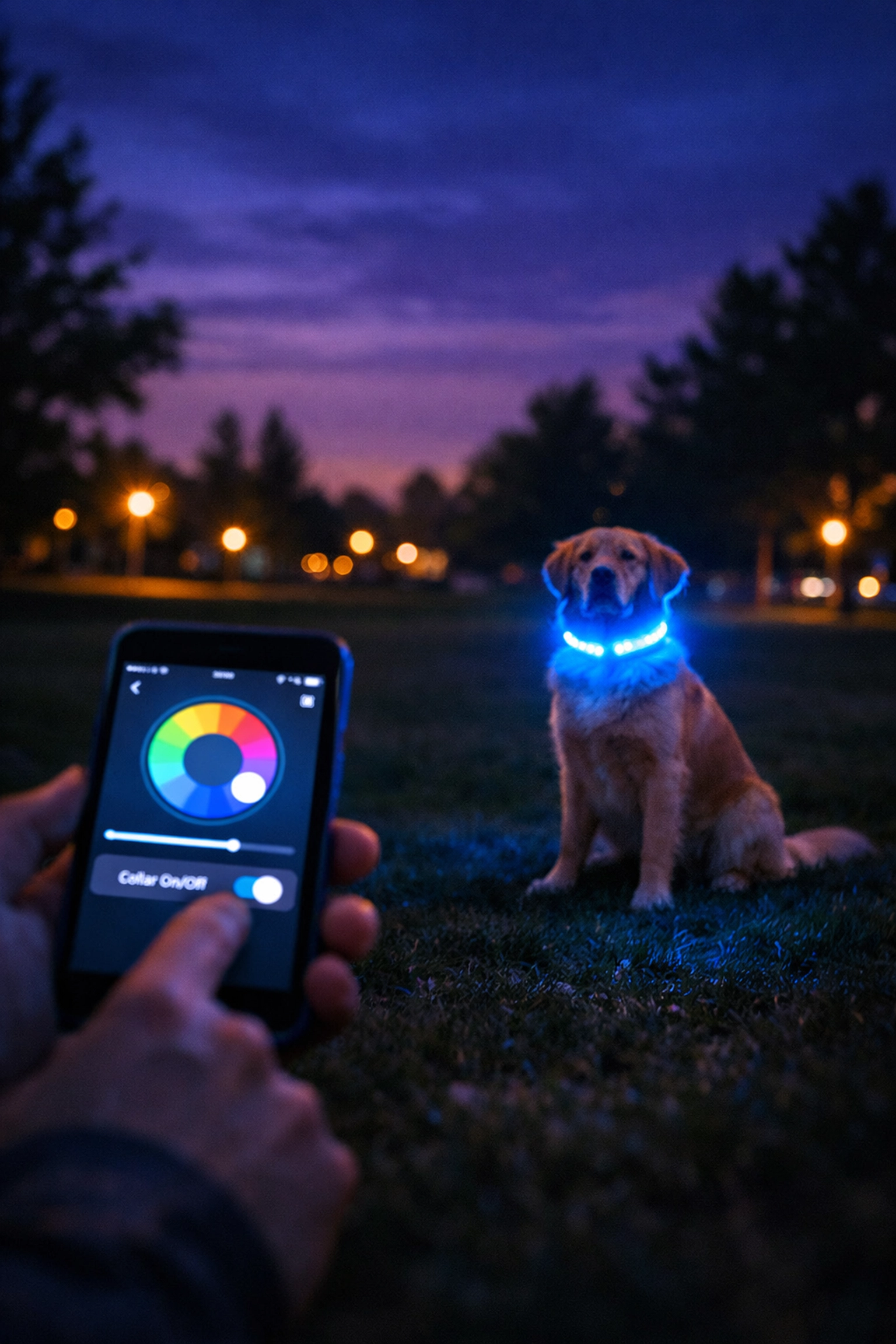
Remote-controlled LED collars give you the power to turn the light on or off from a distance, usually through a handheld remote or smartphone app. Some models even let you switch between colors, adjust brightness, or cycle through different light modes: all without touching your dog's collar. This is clutch if your pup tends to wander off during off-leash adventures or if you need to quickly locate them in a crowded park.
Standard LED collars, on the other hand, work independently. Once you activate them (usually with a button on the collar itself), they cycle through preset light modes: solid, slow flash, quick flash: without any remote interaction. They're always on (or always cycling), which means consistent visibility without you having to think about it.
So it really comes down to this: Do you want active control, or do you want set-it-and-forget-it visibility?
Remote-Controlled LED Collars: When You Need Command From a Distance
If your dog has a habit of darting ahead on trails or exploring a little too enthusiastically, a light up dog collar with remote is your best bet. Here's why:
Instant Activation for Wandering Dogs
Picture this: You're at the dog park at dusk, and your dog takes off toward the tree line. With a remote-controlled collar, you can hit a button and instantly light them up: even if they're 50 feet away. No need to chase them down just to turn on their collar. This feature is especially valuable for dogs with high prey drives or those still working on their recall training.
Battery Conservation on Demand
One underrated benefit? You can turn the light off when you don't need it. If you're walking through a well-lit neighborhood or hanging out in your backyard, there's no reason to drain the battery. Remote-controlled collars let you toggle visibility on and off, which can extend battery life significantly: some models offer 3-5 days of battery life depending on usage patterns.
Multi-Dog Households Get Extra Benefits
Got more than one dog? Remote collars often come with multiple color options (red, blue, green, white), so you can assign each dog their own color. This makes it ridiculously easy to distinguish between your pups in low-light conditions. No more squinting to figure out which shadow belongs to which dog.
Smartphone Integration and Tracking Features
Some advanced models: like the LINK AKC Smart Collar: take it a step further by integrating GPS tracking, activity monitoring, and even temperature alerts through a smartphone app. This transforms your dog's collar from a simple visibility tool into a comprehensive safety and health tracker. You'll know exactly where your dog is, how much exercise they're getting, and whether they're overheating on summer evening walks.
Standard LED Collars: Reliable Visibility Without the Fuss
Not everyone needs (or wants) a remote-controlled collar. If you're someone who values simplicity and consistent visibility, standard LED collars have serious advantages.
Always-On Visibility Means Zero Oversight
The biggest perk? You never have to remember to turn it on. Once you clip that collar on your dog, they're visible: period. This is ideal for 9-to-5 commuters who are mentally exhausted after work and just want a quick, stress-free walk around the block. There's no app to open, no remote to keep track of, and no risk of forgetting to activate the light before heading out.
Simpler Design, Fewer Things to Break
Standard LED collars have fewer electronic components, which generally means they're more durable and less prone to failure. There's no remote to lose, no Bluetooth connection to troubleshoot, and no app updates to worry about. Just charge it via USB every few days (most last 4-8 hours depending on the light mode), and you're good to go.

Lightweight and Comfortable
Without the added electronics for remote functionality, standard LED collars tend to be lighter and less bulky. This matters more than you'd think, especially for smaller dogs or breeds with sensitive necks. A lighter collar means your dog is more likely to tolerate it comfortably during longer walks or hikes.
Multiple Light Modes for Different Situations
Don't mistake "standard" for "basic." Most quality LED collars offer multiple light modes that you can cycle through manually. Red light modes are perfect for camping or nighttime trail walks because they preserve your night vision while still keeping your dog visible. Flashing modes work best on busy streets where you need maximum visibility from passing traffic.
Safety Head-to-Head: Which Actually Keeps Your Dog Safer?
Here's the truth: Both types significantly improve your dog's safety in low-light conditions. The question isn't really which one is safer: it's which one fits your specific situation better.
Visibility and Brightness
Modern LED collars (both remote and standard) use high-powered LEDs that are visible from up to 1,000 feet away. Some brands claim their collars are 150% brighter than competitors, though visibility also depends on the light mode you're using and the environmental conditions (fog, rain, urban light pollution, etc.).
The key takeaway? If your dog is wearing a functioning LED collar, they're dramatically more visible than they would be without one. Whether you control it remotely or let it run automatically doesn't change the fundamental brightness.
Battery Life and Reliability
Remote-controlled collars tend to have longer overall battery life because you can turn them off when not needed. However, they also have more components that need power (Bluetooth, GPS, app connectivity), which can drain the battery faster when actively in use.
Standard LED collars offer more predictable battery performance: you know exactly how long they'll last based on which light mode you're using. This reliability matters if you're an active adventurer who's spending full days on the trails and can't afford for the light to die mid-hike.
Real-World Failure Points
Remote collars can fail if the remote dies, if you lose the remote, or if the Bluetooth connection drops. Standard collars can fail if the battery dies or if you forget to charge them. Both risks are manageable with proper planning, but it's worth considering which failure mode is more likely to catch you off guard.
Choosing Based on Your Lifestyle
Your daily routine and your dog's personality should drive this decision more than anything else.
For the 9-to-5 Commuter
If you're walking your dog during the twilight hours before or after work, a standard LED collar makes the most sense. Your walks are probably routine (same neighborhood, same times), and you want something that just works without adding another task to your mental checklist. The always-on visibility gives you peace of mind, and the simplicity means one less thing to think about after a long day.
For the Active Adventurer
If you're hitting trails at dawn, exploring unfamiliar parks, or doing off-leash hiking in remote areas, a light up dog collar with remote is the smarter investment. The ability to control the light from a distance is invaluable when your dog is ranging farther from you, and features like GPS tracking add an extra safety layer when you're far from home. Plus, battery conservation becomes more important on multi-day camping trips.
For Training and Young Dogs
Got a puppy or a dog still learning boundaries? Remote-controlled collars double as a training aid. You can use the light activation as a recall cue: turn on the light, and your dog learns to check in with you. It's a subtle but effective way to reinforce good behavior during twilight training sessions.
Making the Right Choice for Your Dog
At the end of the day, both options will drastically improve your dog's safety compared to a standard non-illuminated collar. The "better" choice isn't about which technology is superior: it's about which one aligns with how you actually live and walk your dog.
Choose a light up dog collar with remote if:
Your dog frequently wanders out of sight
You do a lot of off-leash hiking or running
You have multiple dogs and want to distinguish between them
You want GPS tracking or activity monitoring features
You're comfortable managing app-based technology
Choose a standard LED collar if:
You want consistent, automatic visibility without thinking about it
Your walks follow predictable routes and schedules
You prefer simpler, more durable gear with fewer components
You don't want to carry or manage a remote during walks
Your dog is sensitive to weight and needs the lightest option possible
The most important thing? Pick one and actually use it. A fancy remote-controlled collar sitting in your closet doesn't keep your dog safe. A simple standard LED collar that you clip on every single evening walk absolutely does.
Your dog's safety isn't about having the most advanced technology: it's about consistent visibility when it matters most. Whether you go high-tech or keep it simple, you're making the right call just by prioritizing their visibility in low-light conditions.

Comments