
Guitar with LEDs 101: A Beginner's Guide to Mastering Sound-Activated Straps
.jpg/v1/fill/w_320,h_320/file.jpg)
You've seen them on stage: guitarists whose straps light up like a visual heartbeat, syncing perfectly with every chord and riff. That's not just flashy gear. It's a guitar with LEDs that responds to your playing in real-time, turning your performance into something your audience won't forget.
If you're new to sound-activated LED technology, you're in the right place. This guide breaks down everything you need to know about LEDs in guitar straps, how they actually work, and what makes them a game-changer for musicians who want to stand out on stage.
What Makes a Guitar with LEDs Different
A standard guitar strap holds your instrument. A guitar with LEDs creates an experience.
Sound-activated LED guitar straps combine microphone technology with programmable lighting to produce visual displays that literally respond to your music. When you hit a low E string, the strap reacts differently than when you bend a high note on the B string. Up to 73% of audience members report that visual elements significantly impact their enjoyment of live performances, which means your strap isn't just decoration: it's part of the show.
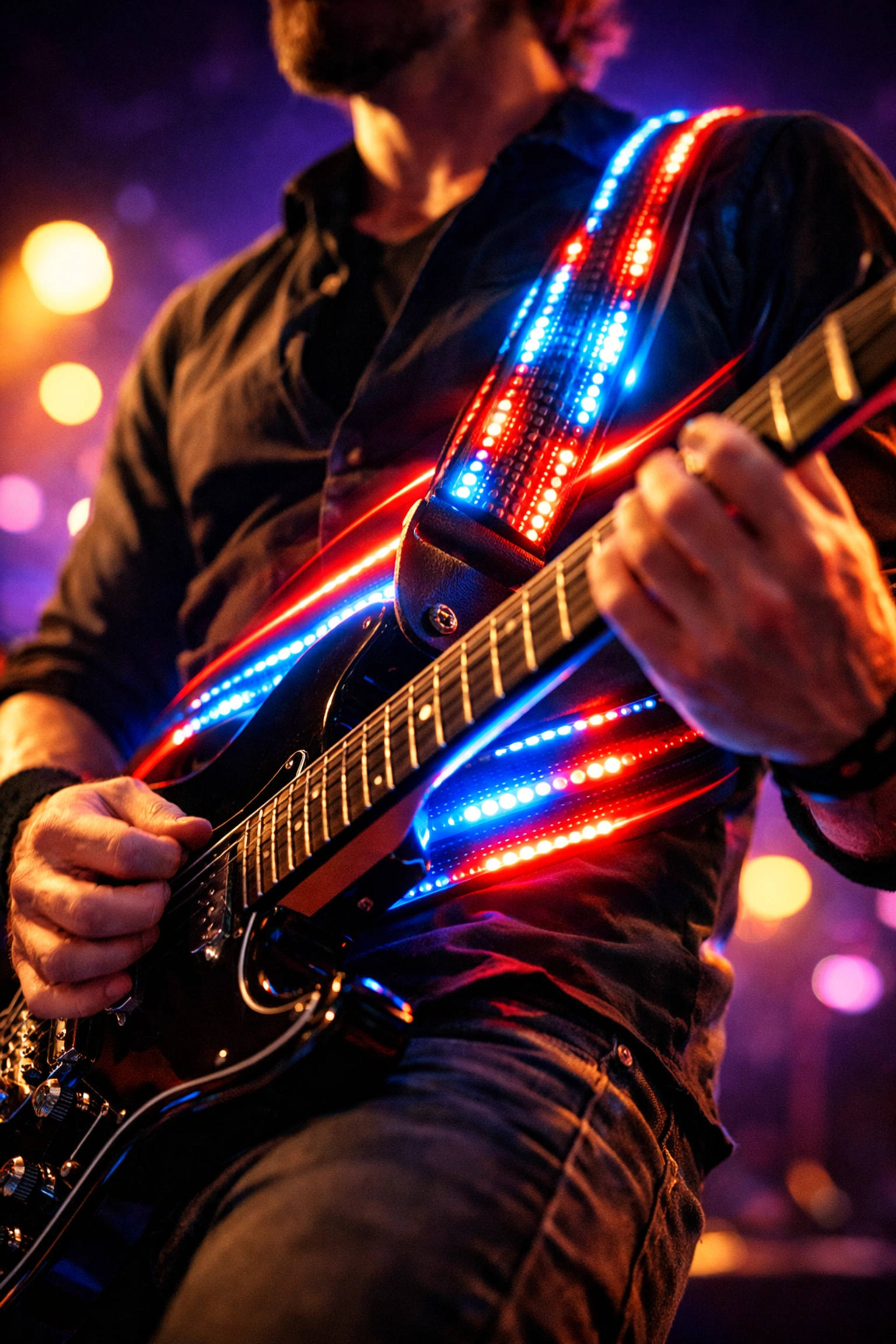
The key difference between basic LED accessories and sound-activated systems is responsiveness. Static lights look cool for about five minutes. Lights that pulse, shift, and react to your dynamics? Those keep eyes on you all night.
How Sound-Activation Technology Actually Works
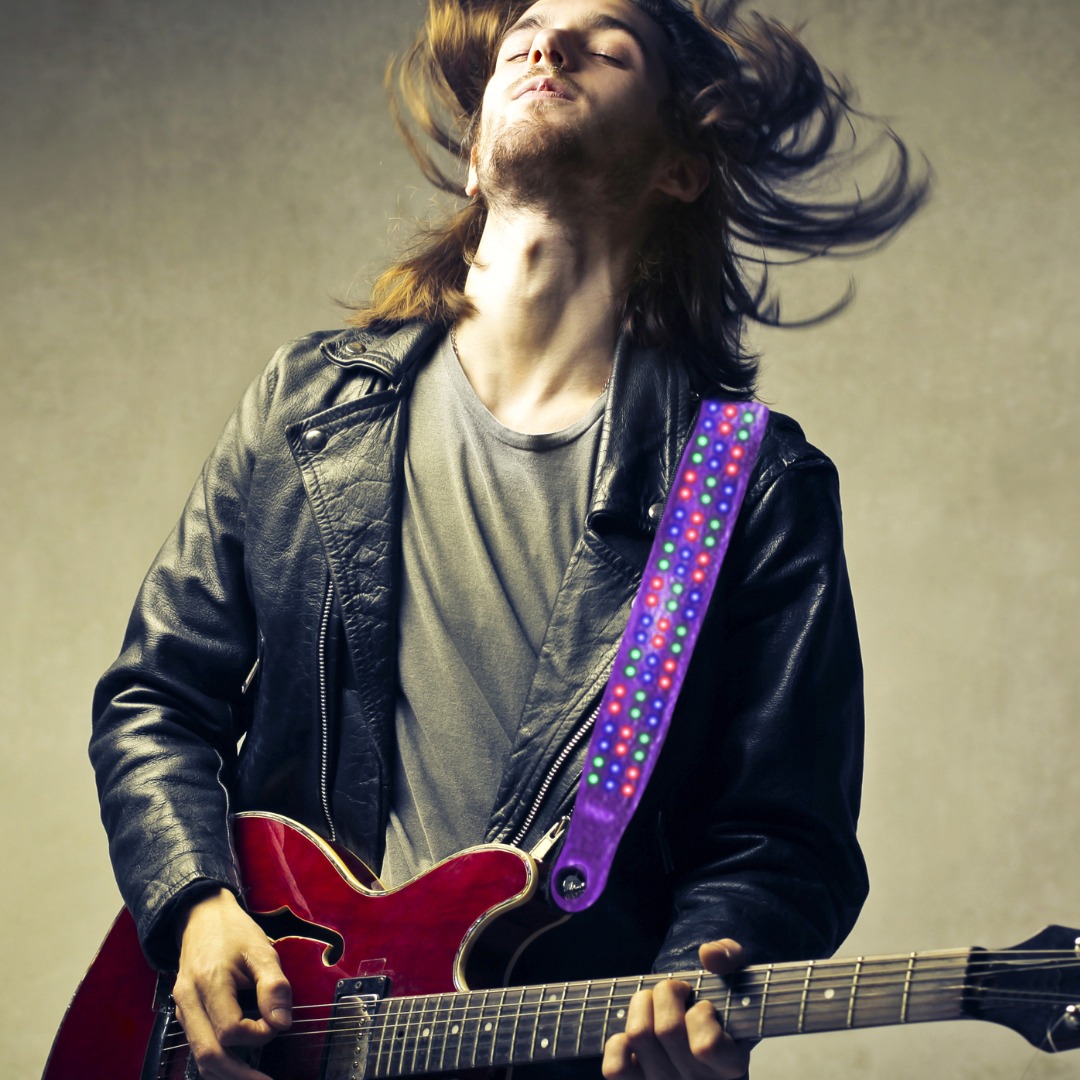
Here's where things get interesting. When you plug in and play, advanced microphones embedded in the strap detect both the volume and frequency of what you're playing. A processing chip analyzes this audio input and translates it into lighting commands: all happening within 0.03 seconds of your playing.
The frequency response typically breaks down like this:
Low frequencies (think bass notes and heavy palm-muted power chords) trigger blue lights
Mid frequencies (rhythm parts and vocal ranges) produce green lights
High frequencies (solos and treble-heavy riffs) display red lights
But it's not just about color. The brightness responds to your dynamics too. Strum hard during a chorus, and the LEDs flare up bright. Drop into a soft, fingerpicked verse, and the lights dim to a gentle glow. Your strap becomes a visual extension of your musical expression.
The Technical Setup
Most quality systems use one of two connection methods. Some LED straps have built-in microphones that pick up ambient sound (simple but effective). Others use a splitter cable that connects directly from your guitar, ensuring the lights respond only to your playing: not the drummer, bassist, or crowd noise.
The advantage of a direct connection? Precision. Your strap reacts to exactly what you're creating, making the visual feedback tighter and more synchronized with your performance.
Key Features to Look For in Your First LED Guitar Strap
Not all LEDs in guitar straps are created equal. Here's what separates beginner-friendly options from frustrating duds.
Multiple Lighting Modes: Professional models offer up to 16 different lighting patterns controlled through compact remotes. You might want a slow pulse for ballads, a rapid strobe for punk energy, or a color-chasing effect for electronic-influenced tracks. Having options means you can match the vibe to the song.
Adjustable Sensitivity: A dial or digital control that lets you fine-tune how reactive the lights are to your playing is essential. What works in a quiet studio doesn't work the same in a loud venue. The ability to adjust sensitivity on the fly prevents your strap from going dark during softer passages or staying constantly maxed out during loud sections.
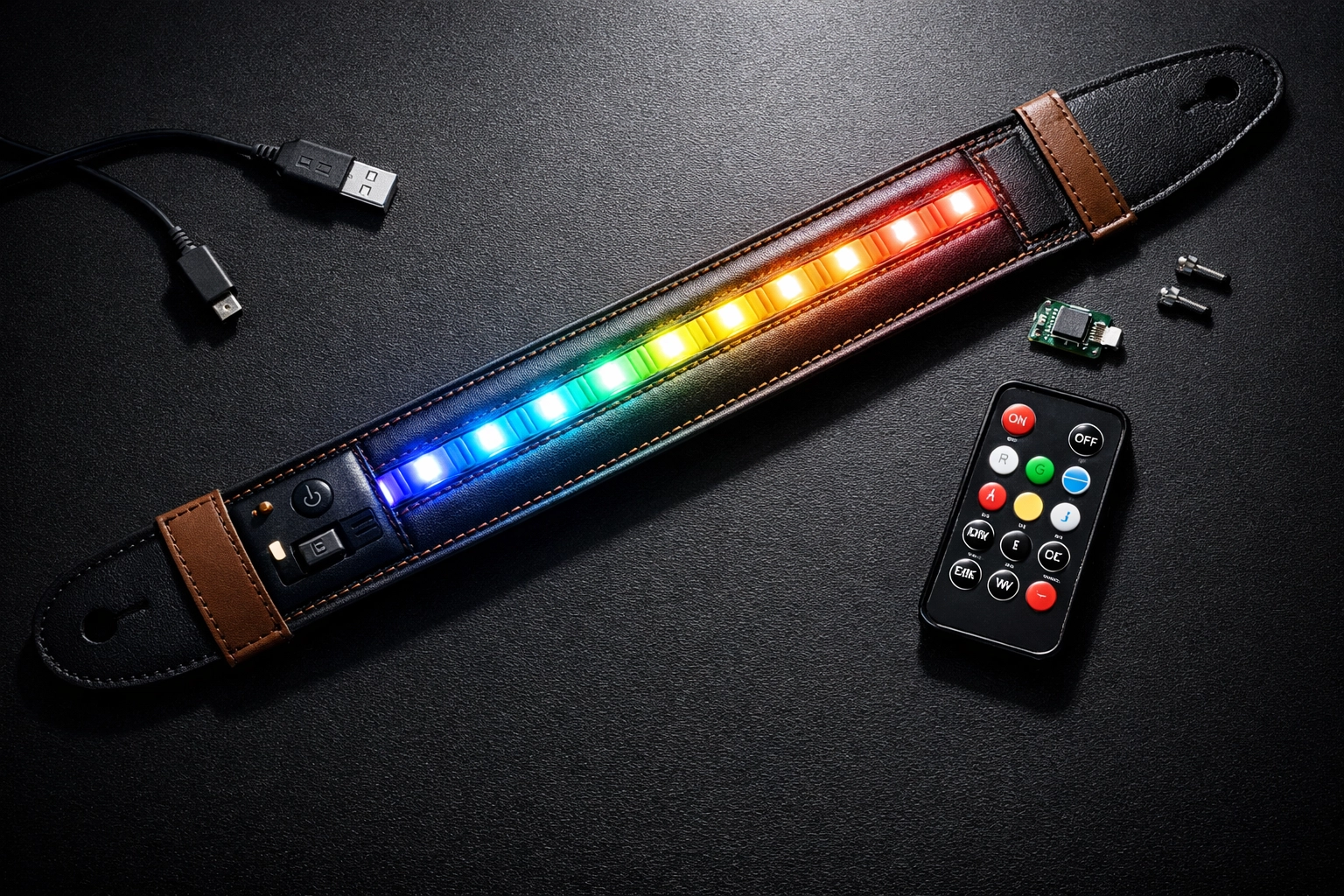
Brightness Control: Stage lights, venue size, and time of day all affect how visible your LEDs will be. A good strap lets you crank up the brightness for outdoor festivals or dial it down for intimate club settings.
Battery Life and Charging: USB-rechargeable systems are standard now. Look for models that give you at least 4-6 hours of continuous use per charge: enough to cover rehearsal, soundcheck, and a full set without dying mid-performance.
Durability: Your strap takes a beating. Leather construction with reinforced stitching around LED housings ensures your investment survives gigging life. Cheap materials mean broken connections and dead zones in your lighting after a few months.
Getting Started: Your First Performance with LED Technology
You've got your sound-activated strap. Now what?
Start by testing it at home before you take it on stage. Plug in, play through your setlist, and watch how the lights respond. You'll quickly notice which songs create the most dramatic visual effects. Dynamic changes: quiet verses exploding into loud choruses: make LED technology shine. Songs with consistent volume throughout don't give the lights much to work with.
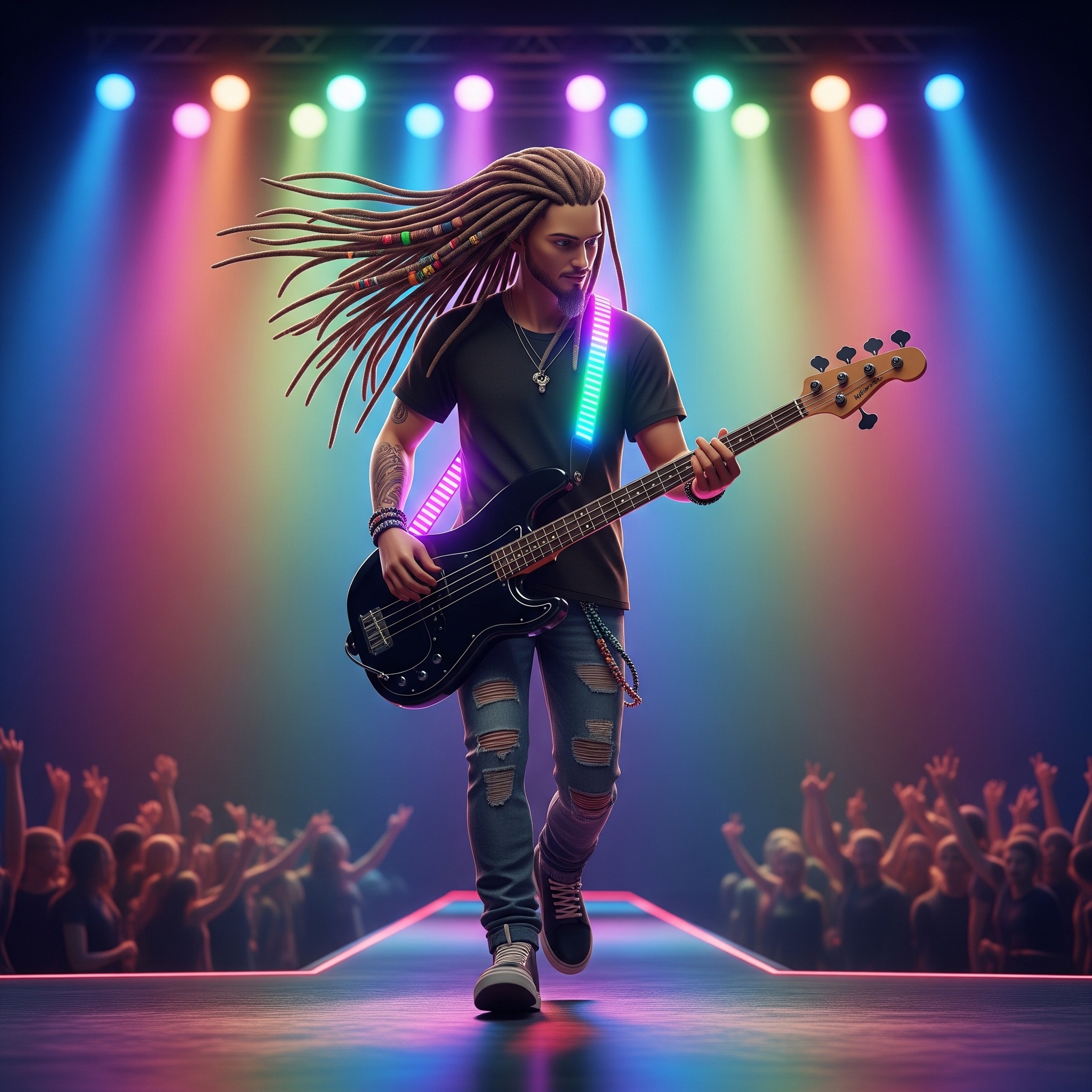
Adjust the sensitivity dial during this testing phase. If you're using an acoustic signal path or lower-output pickups, you might need higher sensitivity. High-output humbuckers in a cranked amp setup? Dial it back or the lights will stay pegged at maximum constantly.
Choose your lighting mode based on genre and song tempo. Fast color-cycling works great for upbeat rock and pop. Solid color responsive modes (where brightness changes but color stays consistent) suit blues and jazz where you want visual feedback without distraction.
Position matters. If your strap has a wired microphone component, make sure it's positioned where it can actually pick up your guitar's sound: not buried against your body or facing away from the amp.
Tips for Maximizing Visual Impact
Once you've got the basics down, here's how to take it to the next level.
Coordinate with your setlist structure. Save your most visually dramatic lighting modes for peak moments: the final chorus, the guitar solo, or the bridge where the song builds energy. Switching modes between songs keeps the visual experience fresh for your audience.
Consider your stage lighting. LED on guitar works best when it contrasts with ambient lighting. If you're performing under bright white stage lights, opt for deeper, more saturated LED colors. Performing in a dark club? Even subtle lighting effects will pop.
Use the remote strategically. Most systems include a foot-operated remote so you can change modes without stopping playing. Practice the transitions at home so you can execute them smoothly during live performance.
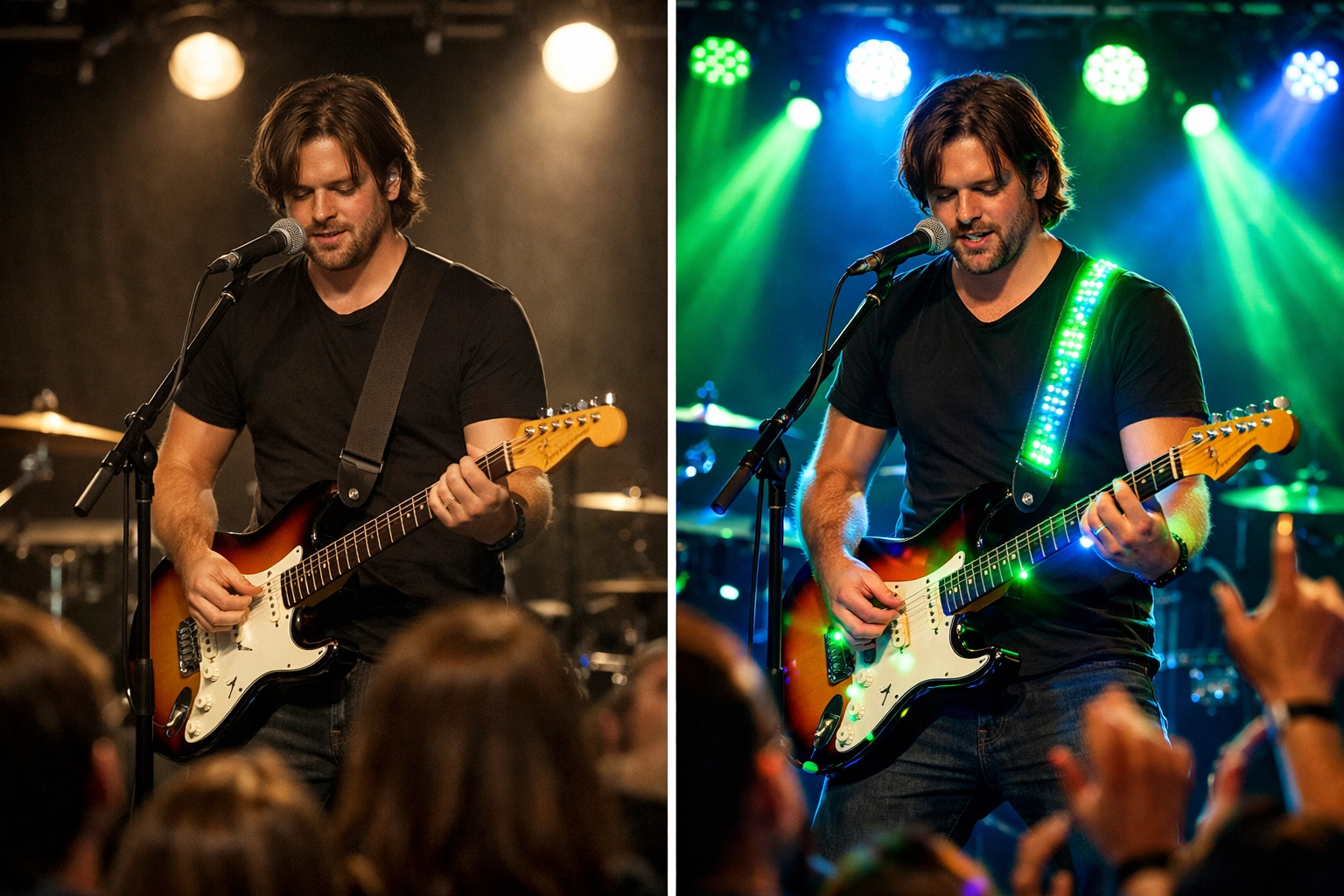
Think about camera angles if you're recording or streaming. LEDs in guitar straps photograph beautifully, but positioning your body so the strap is visible to cameras (and the audience) makes a difference. A slight angle rather than straight-on orientation shows off the full strap.
Why Sound-Activation Beats Static Lighting Every Time
You could buy a strap with basic LEDs that just stay on or blink in a preset pattern. So why bother with sound-activation?
Because music is dynamic, and your visual presentation should be too. A static light pattern becomes background noise within minutes. Your brain tunes it out. Sound-reactive lighting creates genuine synchronization between what the audience hears and what they see. That multisensory connection is what transforms a good performance into a memorable one.
Plus, you don't have to think about it. Once your strap is set up and calibrated, it responds automatically to whatever you play. You're free to focus on your musicianship while the technology handles the visual component.
For genres with lots of dynamic range: rock, electronic, pop, progressive: the effect is particularly powerful. The lights become a visual representation of your musical intensity, giving the audience another layer of connection to what you're creating.
Ready to Light Up Your Next Performance?
A guitar with LEDs isn't just about looking cool (though that's definitely a bonus). It's about creating a more engaging, memorable performance that gives your audience something they can't get from streaming a recording at home.
Sound-activated technology has evolved to the point where it's accessible, reliable, and genuinely enhances the live music experience. Whether you're playing small venues or working your way up to festival stages, LED guitar straps give you a professional edge that separates you from musicians still using standard gear.
The learning curve is minimal. The impact is immediate. And once you've performed with responsive lighting that syncs with your playing, going back to a basic strap feels like performing with one hand tied behind your back.
Check out our full range of custom guitar straps to find the sound-activated LED system that matches your style and performance needs.

Comments