
7 Mistakes You're Making with Remote-Controlled Pet Safety Gear (and How to Fix Them)
.jpg/v1/fill/w_320,h_320/file.jpg)
You love your dog more than anything. But every time you clip that leash for an evening walk or head out on a trail adventure, that familiar knot of anxiety creeps in. What if a car doesn't see us? What if my dog disappears into the darkness on this hiking trail? Am I being a responsible pet parent?
If you've invested in remote-controlled LED pet safety gear, you're already ahead of 85% of pet owners who rely on basic reflective strips or nothing at all. But even with the best LED harnesses and collars, many pet parents are unknowingly making critical mistakes that compromise their dog's safety and their own peace of mind.
Whether you're a rushed commuter squeezing in late-night walks, an adventure enthusiast exploring wooded trails, or a nervous protector of a small or dark-furred dog, these seven mistakes could be putting your furry family member at risk.
Mistake #1: Not Testing Your Remote Range Before You Actually Need It
The Problem: You're halfway through your evening jog when you realize your dog has wandered into the shadows near some bushes. You reach for your remote to activate the bright LED mode, but nothing happens. Your remote is out of range, and now your dark-coated Labrador has essentially vanished into the night.
This scenario plays out more often than you'd think. Up to 60% of pet parents never properly test their remote-controlled LED gear's range limits before their first real-world use.
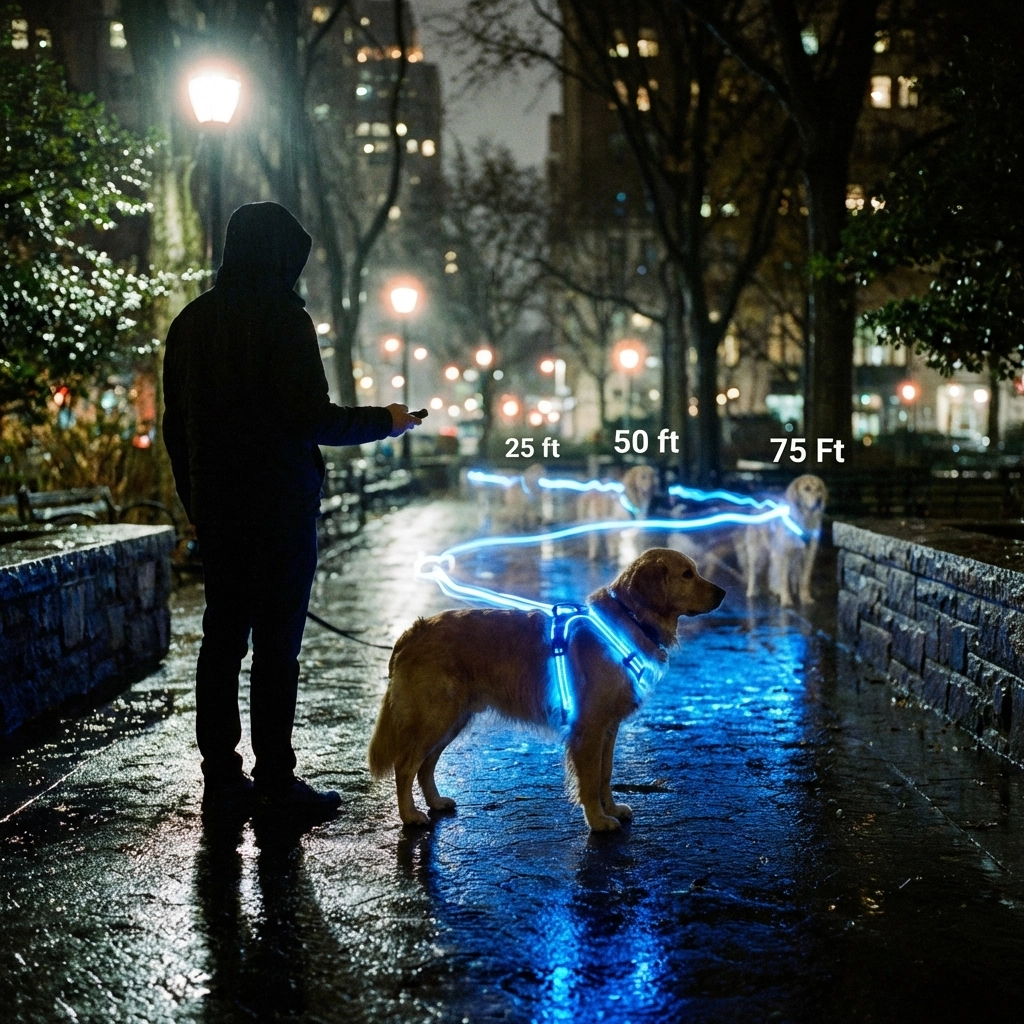
The Fix: Before your next walk, spend 10 minutes in your backyard or a safe open area testing the remote's range. Walk away from your dog (while they're secured) and test the LED controls at 25 feet, 50 feet, and 100 feet. Most quality remote-controlled pet LED systems work effectively up to 300 feet in open areas, but this drops to 75-100 feet in urban environments with buildings and interference.
Mark the maximum reliable range in your mind, and always stay within 75% of that distance during actual walks for a safety buffer.
Mistake #2: Using "Set It and Forget It" Brightness Instead of Environment-Specific Settings
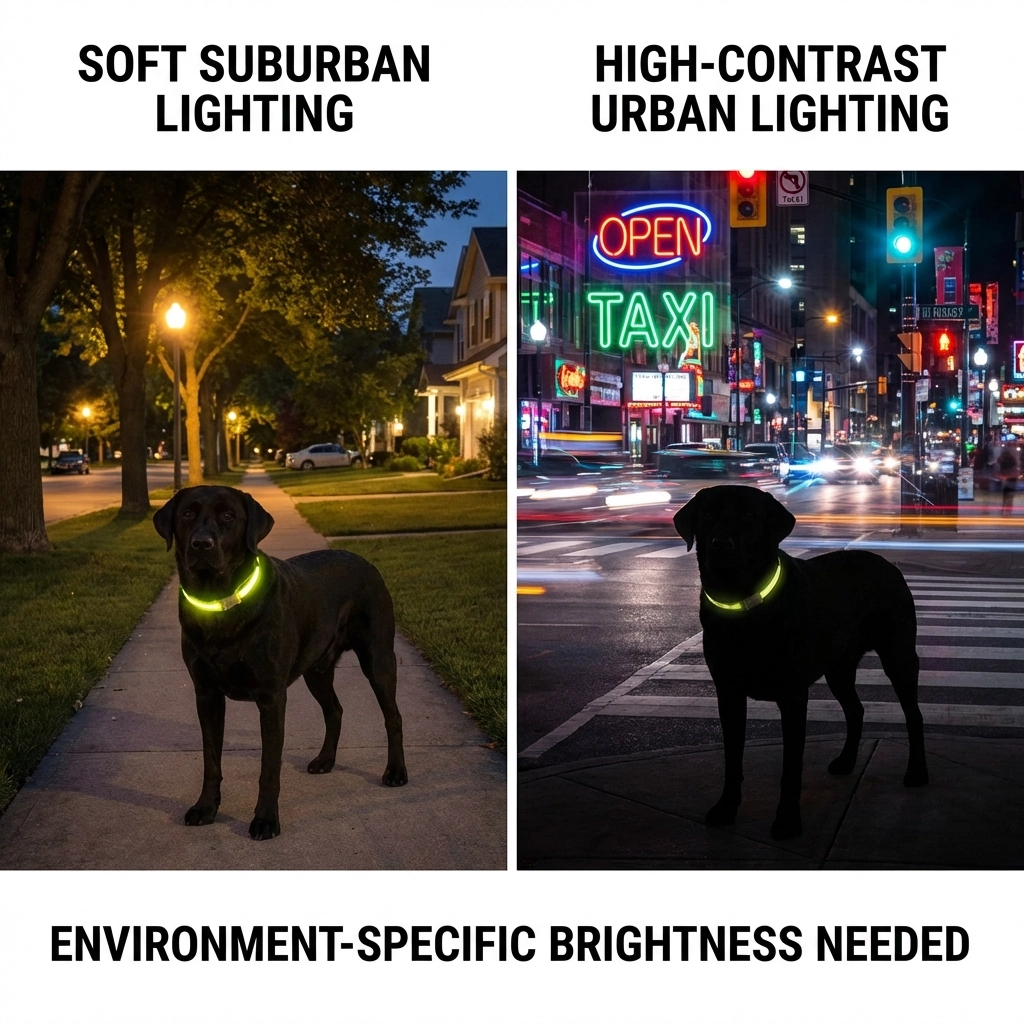
The Problem: Your LED collar worked perfectly on quiet suburban streets, so you assume the same brightness setting will work for everything. But when you're walking downtown during rush hour, competing with street lights, neon signs, and car headlights, your dog becomes nearly invisible again.
Many pet owners use their LED gear on a single brightness setting, not realizing that different environments require different visibility strategies.
The Fix: Learn your remote's brightness modes and match them to your environment:
Urban/High-Traffic Areas: Maximum brightness with flashing mode to cut through light pollution
Quiet Residential Streets: Medium brightness with steady glow to be visible without being disruptive
Trail Hiking: High brightness with slow flash to preserve night vision while maintaining visibility
Early Morning/Dawn: Lower brightness as ambient light increases
The goal isn't just to be seen, it's to be the most visible thing in your specific environment.
Mistake #3: Forgetting the Battery Life Reality Check
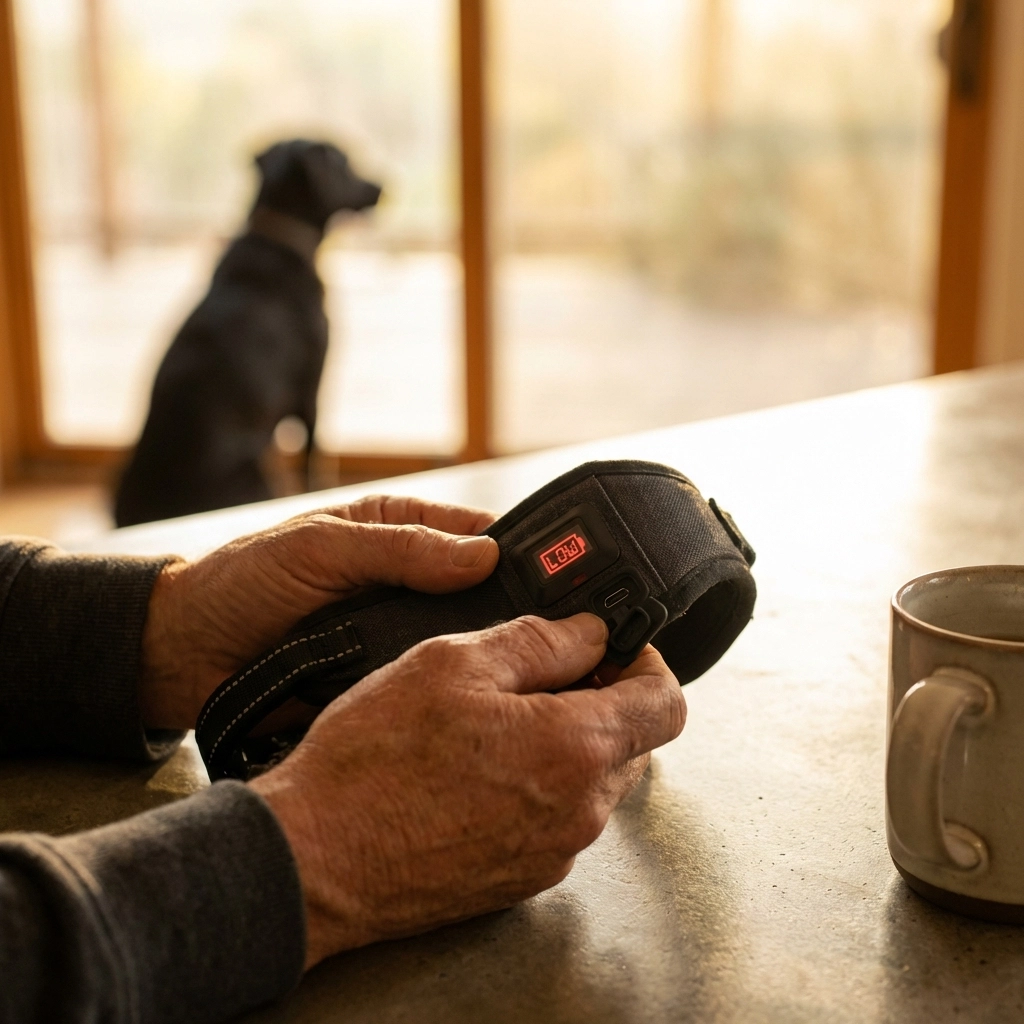
The Problem: It's 6 AM, you're already running late for work, and you need to get your dog's morning walk done before your long commute. You grab the LED harness, and... dead. Completely dead. Now you're facing the choice between skipping the walk (hello, guilt!) or walking your black German Shepherd in pre-dawn darkness without any safety lighting.
Up to 40% of LED pet gear failures happen because owners don't monitor battery life properly.
The Fix: Implement a simple "charge schedule" system:
Daily Users: Check battery indicator every 3rd use
Weekend Warriors: Full charge before every adventure
Occasional Users: Test gear 24 hours before planned use
Most remote-controlled LED pet harnesses provide 8-12 hours of continuous use on a full charge, but this varies dramatically based on brightness settings and temperature. Cold weather can reduce battery life by up to 30%.
Keep a backup plan: either a secondary charged collar or a small flashlight specifically for pet walks.

Mistake #4: Accepting Poor Fit Instead of Adjusting for Maximum Visibility
The Problem: Your LED harness fits "well enough": it's not falling off, so it must be fine, right? Wrong. A properly fitted LED harness doesn't just need to stay on; it needs to position the light sources for 360-degree visibility while remaining comfortable enough that your dog doesn't develop negative associations with wearing it.
The Fix: The "two-finger rule" applies here, but with a twist. You should be able to fit two fingers under the harness straps, but the LED strips should sit flat against your dog's chest and back without gaps or twisting.
Key fit checkpoints:
LED strips lie flat without bunching or rotating
No red marks on skin after 30-minute wear
Dog moves naturally without pulling or pawing at the gear
Even light distribution visible from front, back, and both sides
For dogs with thick coats, you might need to gently part the fur around LED contact points to ensure maximum light projection.
Mistake #5: Using Generic Settings Instead of Customizing for Your Dog's Specific Risk Profile
The Problem: All dogs are not created equal when it comes to visibility challenges. A golden retriever has vastly different safety needs than a small, black Chihuahua. But most pet owners use the same LED settings regardless of their dog's size, color, or behavior patterns.
The Fix: Customize your LED strategy based on your dog's "risk profile":
Small Dogs (Under 25 lbs): Use bright, attention-grabbing flash patterns. Small dogs are harder to spot and need to "announce" their presence more aggressively.
Dark-Coated Dogs: Maximum brightness is non-negotiable. Dark fur absorbs light rather than reflecting it, so you need 2-3 times the illumination of lighter-colored dogs for equivalent visibility.
Energetic/Unpredictable Dogs: Use steady-glow modes rather than flashing. Flashing lights on a dog that suddenly changes direction can confuse drivers about the dog's location and movement.
Senior Dogs: Brighter settings with slower movement patterns help drivers gauge the dog's pace and predict their path.
Mistake #6: Ignoring Weather Resistance Until It's Too Late
The Problem: Your LED gear worked perfectly during three months of dry weather. Then came the first rainy evening walk, and suddenly you're dealing with condensation inside the LED housing, reduced brightness, or complete failure.
Only 30% of pet owners properly test their LED gear's weather resistance before encountering challenging conditions.
The Fix: Before you need weather resistance, test it:
Light Rain Simulation: Use a gentle garden hose to simulate light rain while the LED system is operating
Temperature Extremes: Test operation in both hot car conditions (if you travel with gear) and cold garage conditions
Moisture Recovery: After wet conditions, ensure the gear dries completely before storage to prevent internal corrosion
Quality remote-controlled LED pet gear should handle rain, snow, and temperatures from -10°F to 120°F without performance degradation.
Mistake #7: Creating False Security by Relying Only on LED Visibility
The Problem: LED harnesses and collars dramatically improve your dog's visibility, but they're not magic shields. Some pet parents become overconfident and reduce other safety measures, thinking the LEDs alone will prevent all accidents.
The Fix: LED gear should be part of a complete safety system, not the entire system:
Maintain strong leash control regardless of LED visibility
Choose well-lit walking routes when possible, using LEDs as enhancement rather than compensation
Stay alert and engaged during walks instead of assuming drivers will always see the LEDs
Use reflective accessories in addition to LEDs for multiple visibility angles
Practice recall training so your dog responds to voice commands even in distracting environments
Think of LED gear as your first line of defense, with traditional safety practices as your backup systems.
The Peace of Mind You Deserve
Every evening walk, hiking adventure, and early morning bathroom break should be about enjoying time with your dog: not worrying about their safety. When you avoid these seven mistakes, your remote-controlled LED pet safety gear transforms from a simple accessory into a genuine peace-of-mind system.
For the commuter rushing through post-work walks, properly configured LED gear means no more guilt about shortened evening outings. For the adventure enthusiast exploring new trails, tested and customized settings provide confidence in low-light conditions. For the nervous protector of small or dark-furred dogs, reliable LED visibility means you can finally relax and enjoy the walk instead of constantly scanning for threats.
Your dog's safety isn't just about surviving walks: it's about both of you thriving during the time you spend together. When you eliminate these common mistakes, every walk becomes an opportunity for bonding instead of a source of anxiety.
Take 15 minutes this week to review your LED pet gear setup. Test the range, adjust the fit, check the battery, and customize the settings for your specific dog and walking environment. Your future self: and your dog: will thank you for the investment in proper preparation.
Ready to upgrade your pet's safety with remote-controlled LED technology that actually works the way you need it to? Explore DC's LEDs' complete line of Shiny Pet safety solutions and discover how proper LED pet gear can transform every walk into a worry-free adventure.

Comments