
Active vs. Passive Safety: Is Your Reflective Vest Putting You at Risk?
.jpg/v1/fill/w_320,h_320/file.jpg)
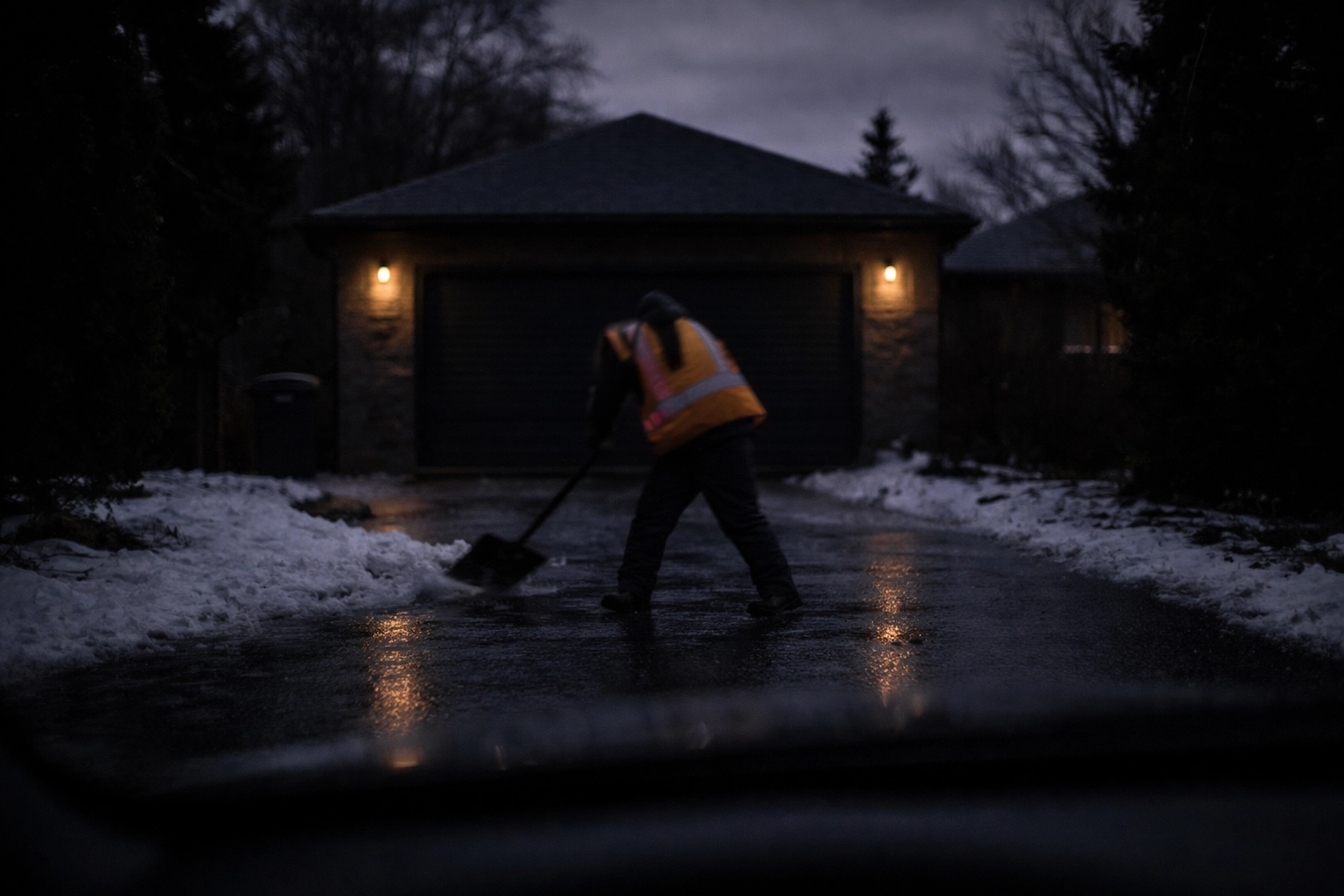
You pull on your reflective vest before heading out to shovel the driveway at dusk. You're visible now, right? The bright orange fabric, the silver stripes, they're designed to keep you safe. But here's the engineering reality that most people overlook: reflective materials only work when direct light hits them at the correct angle and bounces back to an observer.
No headlights? No flashlight beam pointed directly at you? That vest is functionally invisible.
This isn't fear-mongering. It's physics. And understanding the difference between passive and active visibility could be the factor that determines whether a driver, equipment operator, or coworker sees you in time, or doesn't.
The Engineering Behind Passive Visibility
Reflective safety gear uses a technology called retroreflection. Tiny glass beads or prismatic surfaces embedded in the fabric capture incoming light and redirect it back toward its source. When a car's headlights hit your vest, that light bounces back to the driver's eyes.
It's elegant engineering. And under the right conditions, it works exceptionally well.
The key phrase here is "under the right conditions."
Retroreflective materials were developed for highway signage and lane markings, situations where a consistent, powerful light source (vehicle headlights) would always be present and pointed in a predictable direction. When those conditions exist, reflective gear performs admirably. ANSI/ISEA 107 standards exist specifically to certify this performance.
But your driveway at 6 AM isn't a controlled highway environment. Neither is a loading dock at dawn, a construction site during an overcast winter afternoon, or a roadside breakdown where your vehicle's hazard lights are the only illumination.
Where Passive Visibility Fails: The Blind Spot Problem
Consider these common scenarios where reflective-only gear leaves you vulnerable:
1. Ambient Low Light Without Direct Illumination Dawn, dusk, overcast days, and shaded work areas create reduced visibility conditions, but often without a strong, direct light source aimed at you. Your reflective vest needs something to reflect. Diffused ambient light doesn't trigger retroreflection effectively.
2. Angles and Positioning Retroreflection works best when light hits the material at near-perpendicular angles. If you're crouched, bent over, or positioned at an oblique angle to an approaching vehicle, the light may not return to the driver's eyes. Studies on pedestrian visibility indicate that up to 40% of struck-by incidents occur in conditions where the victim was technically wearing compliant high-visibility gear.
3. Competing Light Sources On active job sites or busy roads, multiple light sources create visual noise. Headlights, equipment lights, streetlamps, and signage all compete for a driver's attention. A passive reflective surface becomes one more glint among many, easy to overlook or misidentify.
4. Snow, Rain, and Fog Precipitation scatters light in unpredictable ways. Retroreflective performance degrades significantly in wet conditions, and fog can reduce the effective range of headlights by 50% or more, meaning your vest may not be illuminated until a vehicle is dangerously close.
5. Non-Vehicle Scenarios Not every visibility hazard involves headlights. If you're working near equipment with operators in enclosed cabs, near forklifts in warehouses, or in any situation where the person who needs to see you isn't equipped with a forward-facing light source, passive gear provides minimal protection.
What Active Visibility Actually Means
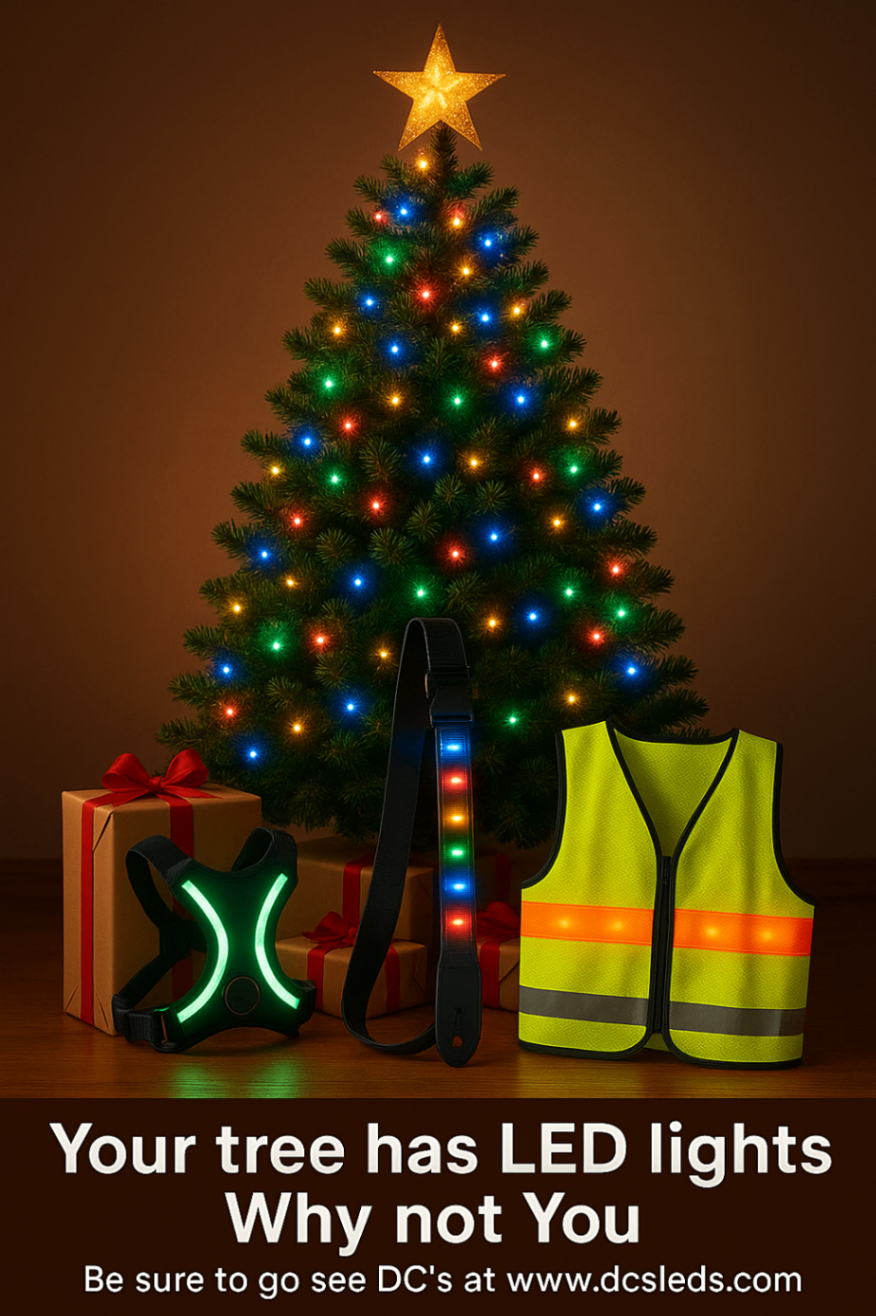
Active visibility refers to safety gear that generates its own light rather than depending on external illumination. LED-integrated vests, harnesses, and accessories fall into this category.
The engineering principle is straightforward: instead of waiting for light to arrive and reflect, active gear broadcasts visibility continuously. You become a light source yourself.
This changes the visibility equation entirely.
With active LED visibility:
No external light source required. You're visible in ambient low-light conditions, shaded areas, and situations without direct illumination.
360-degree presence. Quality LED vests position lights around your torso, creating visibility from multiple angles simultaneously.
Motion and pattern options. Flashing or sequential light patterns trigger peripheral vision detection more effectively than static reflection.
Identification as a person. A moving pattern of lights reads as "human" faster than a static reflective surface, giving observers additional reaction time.
Consistent performance in weather. LED output isn't degraded by rain, snow, or fog the way retroreflection is.
The 360 LED Safety Vest from DC's LEDs exemplifies this approach, remote-controlled LED functionality with multiple modes designed for different conditions and visibility requirements.
Real-World Applications: Who Benefits Most
Understanding the technical differences helps, but practical application matters more. Here's where active visibility provides the most significant safety upgrade:
Homeowners and Residential Tasks
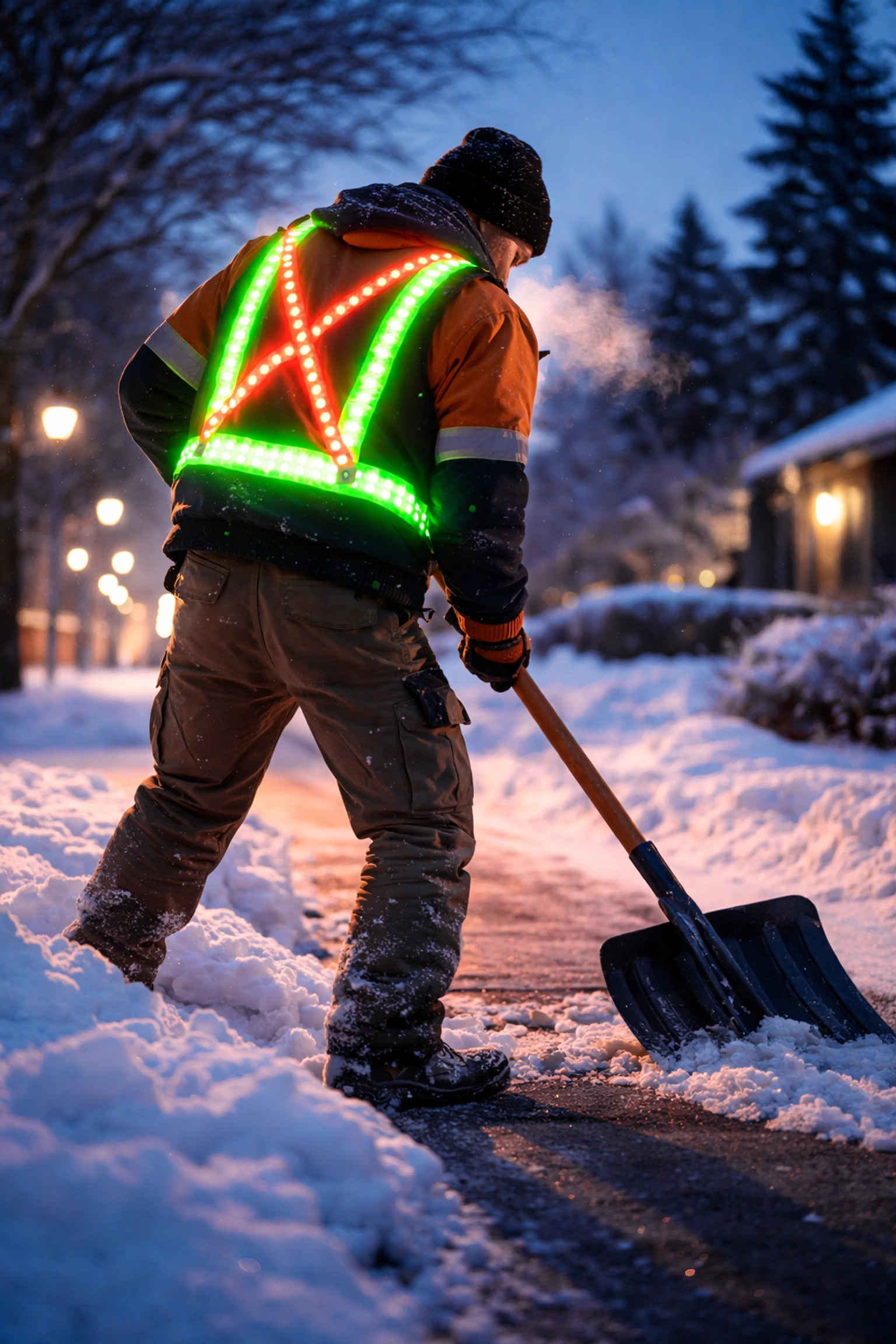
Snow shoveling, taking out trash cans, walking to the mailbox, checking on vehicles in the driveway, these routine activities happen in low-light conditions more often than most people realize. Winter months mean sunrise after 7 AM and sunset before 5 PM across much of North America. That morning shoveling session or evening garbage run happens in darkness or near-darkness for months at a time.
A reflective vest assumes a car will have its headlights on and pointed at you. An active LED vest ensures you're visible regardless.
Contractors and Construction Workers
Struck-by incidents remain one of OSHA's "Fatal Four", the four most common causes of construction fatalities. While engineering controls (barriers, spotters, traffic plans) form the primary defense, personal visibility is the last line of protection when those controls fail or aren't feasible.
Active visibility gear is particularly valuable for:
Early morning concrete pours and late-afternoon site work
Roadside and utility work adjacent to traffic
Loading and staging areas with mixed vehicle/pedestrian activity
Winter shutdowns and seasonal work in reduced daylight
Outdoor and Utility Workers
Meter readers, delivery drivers making stops, utility crews, landscapers finishing jobs at dusk, anyone whose work involves being on or near roadways without continuous direct lighting benefits from active visibility.
The key question to ask yourself: "If there were no headlights pointed at me right now, would I still be visible?"
If the answer is no, passive gear isn't enough for that environment.
Making the Right Visibility Choice: A Practical Framework
Not every situation requires active LED gear. Here's a straightforward framework for deciding what level of visibility protection makes sense:
Passive (Reflective) Gear Is Sufficient When:
You're working in full daylight
Consistent, direct lighting will always be present (e.g., well-lit indoor facilities)
You're the light source holder (you have a flashlight or headlamp pointed outward)
Active (LED) Gear Is Recommended When:
You're working during dawn, dusk, or nighttime hours
Ambient light exists but direct illumination isn't guaranteed
Weather conditions (fog, rain, snow) may reduce headlight effectiveness
You're near vehicles, equipment, or machinery without forward-facing lights
Multiple competing light sources create visual clutter
You need to be identified as a person, not just "something reflective"
Combining Both Provides Maximum Protection.
The best active LED vests incorporate retroreflective elements alongside LED arrays. This layered approach means you're visible when external light is present (passive) AND when it isn't (active).
The Bottom Line: Visibility Is an Engineering Problem
Your safety vest isn't a magic talisman. It's a piece of engineered equipment with specific performance parameters and limitations. Reflective gear performs a specific function: returning light to its source: extremely well. But that function has prerequisites that aren't always met in real-world conditions.
Active LED visibility removes those prerequisites. You generate your own visibility instead of depending on external factors you can't control.
For homeowners clearing driveways, contractors managing job site risks, and outdoor workers navigating low-light conditions, understanding this distinction isn't academic: it's the difference between being seen and being overlooked.
Explore active visibility solutions at DC's LEDs and see how the 360 LED Safety Vest can upgrade your low-light protection.

Comments