
Purple, Red, or Blue LED Guitar Strap: 7 Mistakes You're Making When Picking Your Stage Color (And How to Fix Them)
.jpg/v1/fill/w_320,h_320/file.jpg)
You spent months perfecting your sound, weeks rehearsing your setlist, and hours dialing in your tone. Then you walk on stage with a bright blue LED guitar strap that screams "kids' birthday party" when you're playing doom metal.
We see it all the time. Musicians drop serious money on LED guitar straps without thinking about what their color choice is actually saying to the audience. Color isn't just decoration, it's branding, it's psychology, and when you get it wrong, it's a distraction.
Let's fix that. Here are the seven biggest mistakes musicians make when choosing between purple, red, or blue LED guitar straps, and exactly how to pick the right one for your stage presence.
Mistake #1: Choosing Color Based on "What Looks Cool" Instead of Genre
The most common mistake? Picking your LED strap color the same way you'd pick a car air freshener, pure personal preference with zero strategic thinking.
Here's why that's a problem: Color carries genre expectations. Red conveys passion, energy, and intensity, perfect for rock, punk, and metal. Blue reads as cool, controlled, and modern, ideal for indie, electronic, and alternative acts. Purple sits in between: mysterious, creative, and slightly rebellious, which works beautifully for psychedelic rock, fusion, and experimental genres.
The fix: Start with your genre, not your favorite color. If you're a blues guitarist wearing a bright red LED strap, you're sending mixed signals. If you're in a hardcore band rocking baby blue, your visual doesn't match your sound.
Match your LED strap color to the emotional tone of your music first. Personal preference comes second.

Mistake #2: Ignoring How Stage Lighting Interacts with Your LED Color
Stage lights aren't neutral. They're typically colored, reds, blues, greens, ambers, and they're going to interact with your LED strap whether you planned for it or not.
A purple LED guitar strap under red stage lighting can wash out completely or turn muddy brown. A blue strap under blue lighting disappears. A red strap under red lights? Invisible.
The fix: Think in terms of contrast, not matching. If your venue typically uses warm (red/amber) stage lighting, a blue LED strap will pop. If the stage wash is cool (blue/purple), red creates dramatic contrast. Purple works as a middle-ground option that stays visible across most lighting scenarios without overwhelming the stage.
Pro tip: If you play diverse venues with unpredictable lighting, go with red or purple. Blue is stunning but requires more lighting coordination to stay visible.
Mistake #3: Clashing with Your Guitar Finish
Your LED strap isn't a standalone piece, it's part of a visual system that includes your guitar, your clothing, and your overall stage aesthetic.
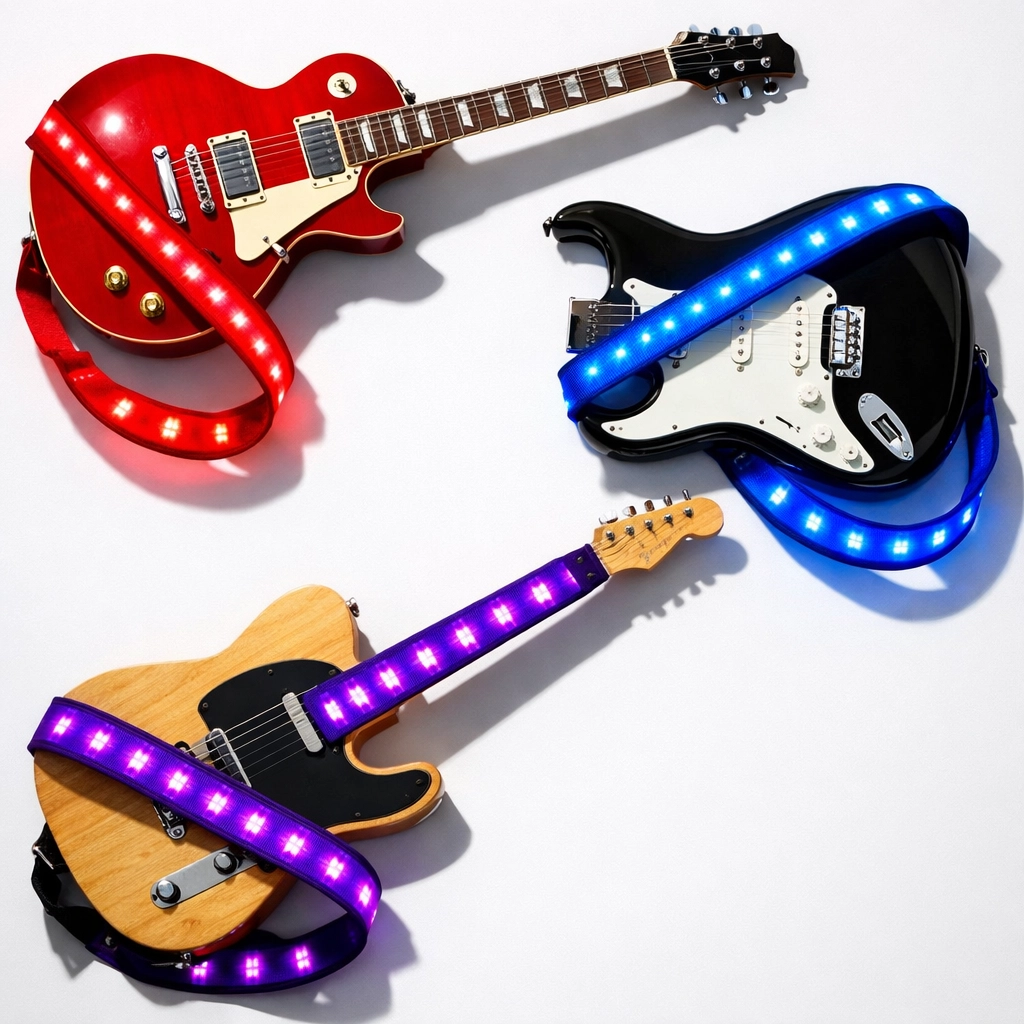
A bright red LED strap on a cherry red Les Paul? That's overkill. A blue strap on a blue sparkle finish? You just created a monochrome blob that the audience can't visually separate.
The fix: Use complementary or contrasting colors. If your guitar is a warm color (sunburst, natural wood, tobacco burst), red or purple LED straps create cohesion. If your guitar is black, white, or a cool finish (blue, green, silver), any of the three colors work, but red provides the strongest contrast.
Metallic and sparkle finishes look incredible with purple LED straps. The shimmer and the LED glow play off each other without competing.
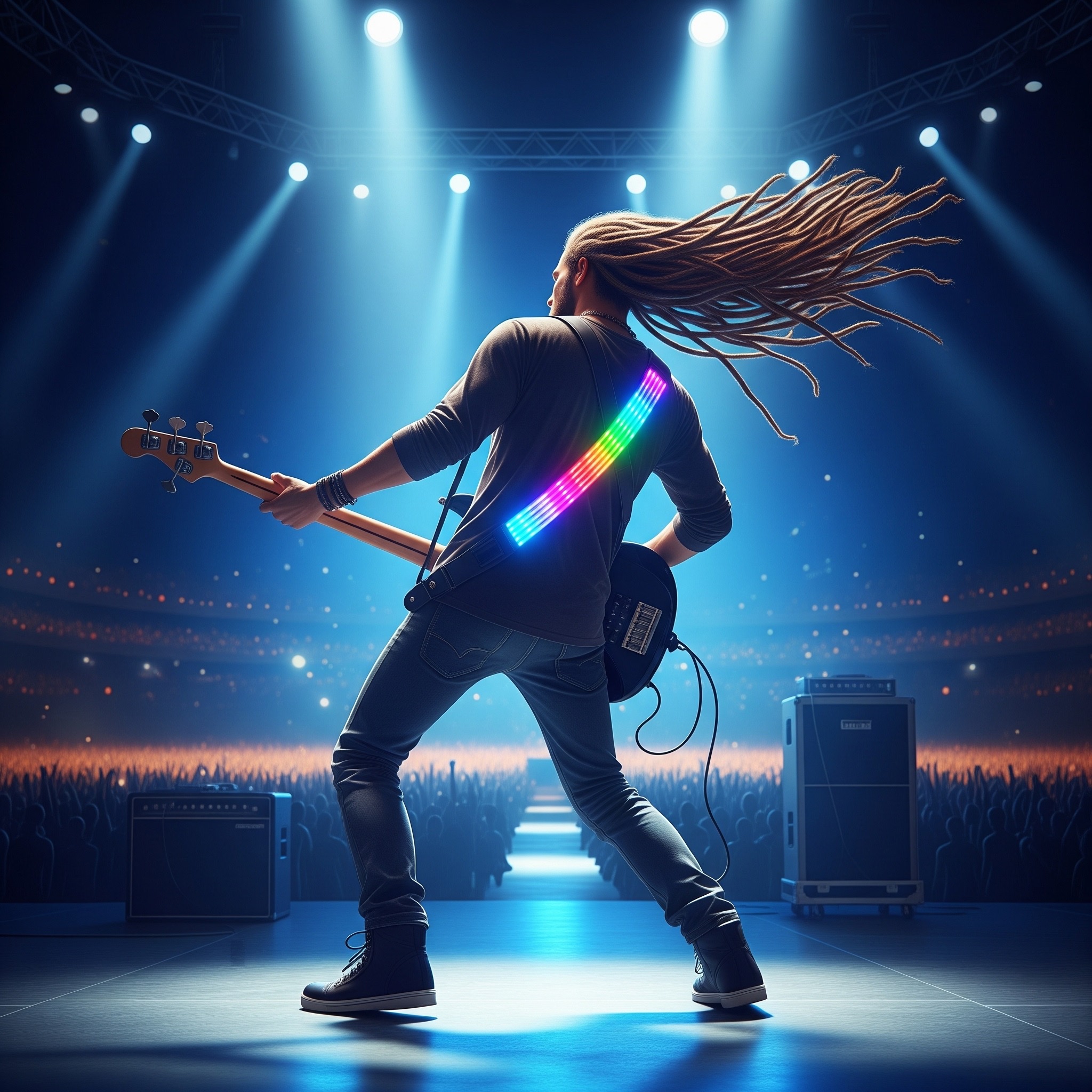
Mistake #4: Not Considering Audience Psychology and Color Perception
Color isn't just aesthetic, it's psychological. The color you choose affects how the audience perceives you before you play a single note.
Red signals aggression, energy, danger, and excitement. It raises heart rate. It demands attention. If your performance is high-energy and physical, red amplifies that. If your set is mellow and introspective, red creates cognitive dissonance.
Blue conveys calm, professionalism, trust, and distance. It's cooler emotionally. Perfect for acts that want to feel modern, controlled, or slightly detached. Less ideal if you're trying to create raw, visceral connection.
Purple is the wildcard. It's associated with creativity, mystery, spirituality, and nonconformity. It works for artists who don't fit neatly into genre boxes or who want to signal "we're doing something different."
The fix: Ask yourself what emotional response you want before the first chord. Then choose the color that primes the audience for that experience.
Mistake #5: Picking LED Strap Color Without Thinking About Your Brand
If you've built any kind of following, online, local, regional, you probably have visual branding, even if it's informal. Your logo colors, your album art, your social media aesthetic, your merch.
Showing up on stage with an LED guitar strap that has nothing to do with that branding is a missed opportunity.
The fix: Align your LED strap color with your existing visual identity. If your band's branding is built around dark reds and blacks, a red LED strap reinforces that instantly. If your solo project uses purples and magentas in all your cover art, a purple strap ties the live experience to the recorded one.
Consistency builds recognition. When your stage presence matches your digital presence, audiences remember you faster.
Mistake #6: Forgetting About Venue Size and Viewing Distance
A color that looks perfect in your rehearsal space or a small club might completely disappear in a theater or festival setting.
Red LEDs are the most visible at distance. They cut through ambient light, fog, and large spaces better than any other color. If you're playing bigger venues or outdoor stages, red gives you the most visibility bang for your buck.
Blue LEDs are stunning up close but lose punch at distance, especially outdoors or in washed-out lighting conditions. They work beautifully in intimate venues or well-controlled theater lighting.
Purple LEDs fall in the middle but skew closer to blue in terms of long-distance visibility. They're ideal for mid-size venues (200–800 capacity) where the audience is close enough to appreciate the nuance.
The fix: If you play a mix of venue sizes, red is the safest bet. If you primarily play clubs and small theaters, blue or purple will give you more creative range without sacrificing visibility.

Mistake #7: Not Testing Your LED Strap Color in Real Performance Conditions
The biggest mistake? Ordering your LED guitar strap, unboxing it at home under household lighting, thinking "yeah, this looks great," and never testing it under stage conditions until showtime.
Stage lighting, fog machines, video screens, and other band members' gear all affect how your LED strap reads to the audience. What looks bold in your living room might wash out completely on stage: or worse, create glare that distracts from the performance.
The fix: Run a full tech rehearsal with stage lighting before your first show with a new LED strap. Bring someone into the audience area to give you real feedback. Take video from multiple angles. Adjust brightness settings if your strap has them (most sound-activated LED straps from DC's LEDs do).
If the color isn't working, you have time to adjust. If it looks killer, you'll perform with confidence knowing your visual game is locked in.
The Bottom Line: LED Strap Color Is Part of Your Performance
Your LED guitar strap isn't just functional gear: it's part of the show. The color you choose sends a message before you play a note, and when you get it right, it amplifies everything else you're doing on stage.
Quick recap:
Match your color to your genre and emotional tone
Consider how stage lighting will interact with your LED color
Make sure your strap complements (or contrasts with) your guitar finish
Use color psychology to prime your audience for the right experience
Align your LED strap with your overall visual branding
Factor in venue size and viewing distance
Test your setup in real performance conditions before showtime
Whether you go with a red guitar strap for high-energy rock, a blue guitar strap for modern indie vibes, or a purple guitar strap for creative genre-bending: make it intentional. Your stage presence will thank you.
Want to see the full range of sound-activated LED guitar strap options? Check out DC's LEDs and find the color that matches your sound.

Comments